Businesses built livelihoods. Institutions helped communities endure.
This reading explores six centers of Black enterprise, including places known as Black Wall Street and communities with their own local identities. Each has a different history of achievement, exclusion, change, and continuity.
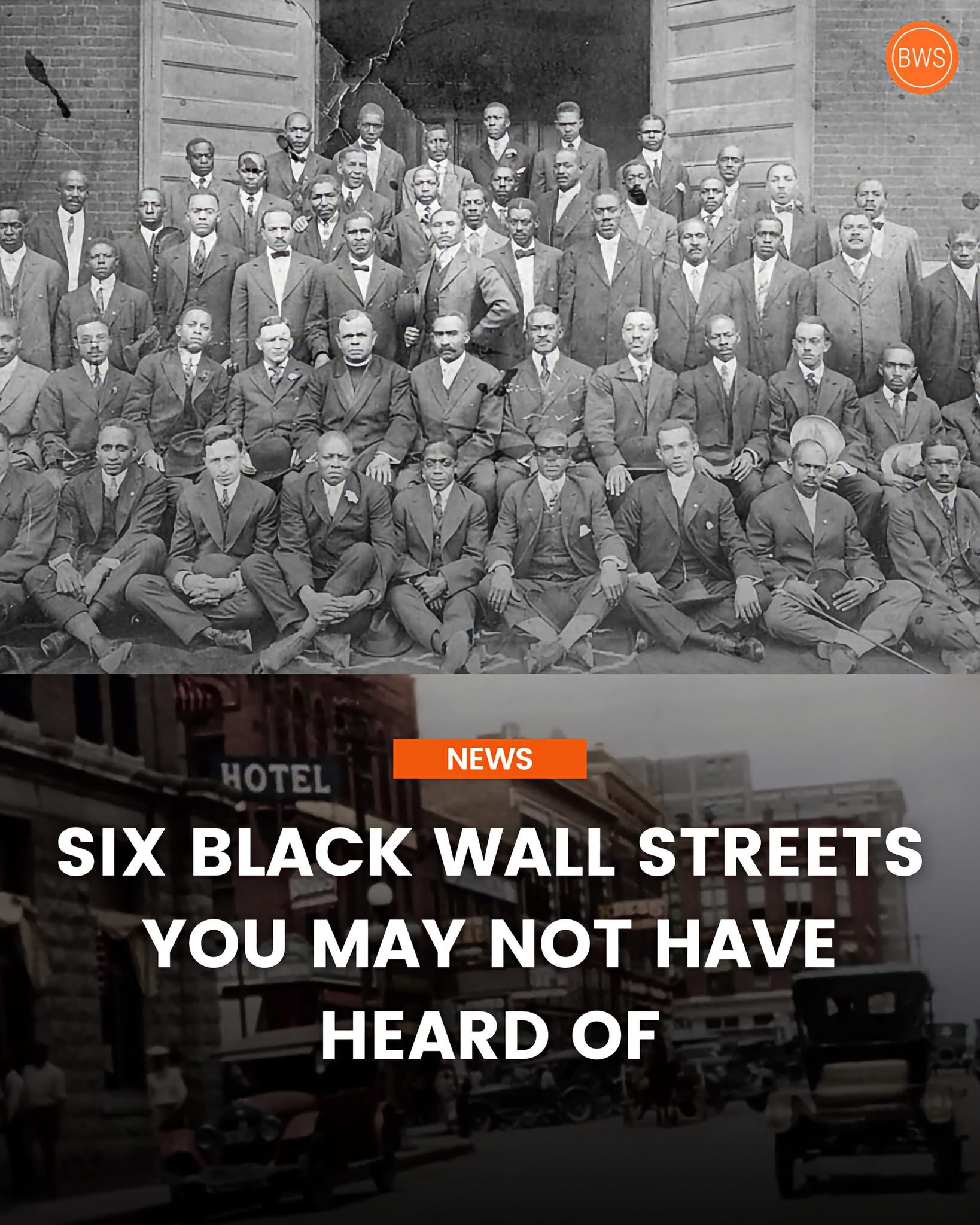
Shared reference graphic. Open to view at full size. The photographer, date, and people pictured have not been verified.
Read beyond the headline
Six communities. Distinct histories.
The image introduces a subject worth studying. The six places below are KSE’s source-linked selection; the graphic itself does not identify its six locations.
Compare what people built, the obstacles they faced, and the records they left. These examples do not form an exhaustive list, and they did not all share the same name or experience.
01 / Richmond, Virginia
Jackson Ward
Banking, mutual support & enterprise
After the Civil War, Jackson Ward became a center of Black entrepreneurship. Banks, insurance businesses, fraternal organizations, and theaters helped make Second Street a commercial hub. The National Park Service records the name “Black Wall Street” there by 1903.
Read the context & reflect +
The True Reformers and Maggie Lena Walker’s St. Luke Penny Savings Bank show how community organizations could build financial institutions under Jim Crow restrictions.
Reflect: How did savings, insurance, and mutual support strengthen the wider community?
Greenwood’s Black-owned businesses and community life made it widely known as Black Wall Street. On May 31 and June 1, 1921, a white mob destroyed homes and businesses during the Tulsa Race Massacre.
Read the context & reflect +
The National Archives preserves a contemporary American Red Cross relief report. It provides evidence of the disaster and relief work rather than reducing the community’s story to a slogan.
Reflect: What can a relief report show, and which experiences would need other records?
Parrish Street became known as Black Wall Street in the early twentieth century. North Carolina Mutual Life Insurance and Mechanics and Farmers Bank were important institutions. Nearby Hayti was a distinct residential, educational, cultural, and religious center connected with this business district.
Read the context & reflect +
The North Carolina historical marker account distinguishes Parrish Street from Hayti and describes the damaging effects of 1960s urban renewal on Black Durham.
Reflect: Why does the relationship between a business district and nearby homes matter?
Auburn Avenue became a major center of Black commercial, social, religious, and political life in the early twentieth century. John Wesley Dobbs named it “Sweet Auburn” in recognition of the neighborhood’s prosperity and opportunity.
Read the context & reflect +
The historic district includes religious, commercial, and community buildings. Studying them together shows how institutions supported a neighborhood beyond individual business success.
Reflect: How can churches, organizations, and businesses support one another?
Known as Black Broadway, U Street brought together Black culture, business, art, and intellectual life. The Scurlock family’s photography documented businesses, churches, schools, and everyday experiences across generations.
Read the context & reflect +
The National Gallery of Art’s account draws on these photographs to examine the community and the family business that recorded it. Black Broadway is a distinct local name, not a claim that every district used “Black Wall Street.”
Reflect: What can photographs reveal about economic life beyond banks and balance sheets?
Founded in 1903, Boley developed as an All-Black town. The Oklahoma Historical Society describes its banks, newspaper, colleges, and local utilities as part of its early growth.
Read the context & reflect +
Boley’s history includes later economic hardship and population change. It is a town-building story with its own setting and timeline, rather than a copy of Greenwood’s history.
Reflect: What institutions help a town support education, trade, and daily life?
Choose one place. Open its source, record one institution people built, and note one question for further research. Separate the source’s evidence from your own interpretation.